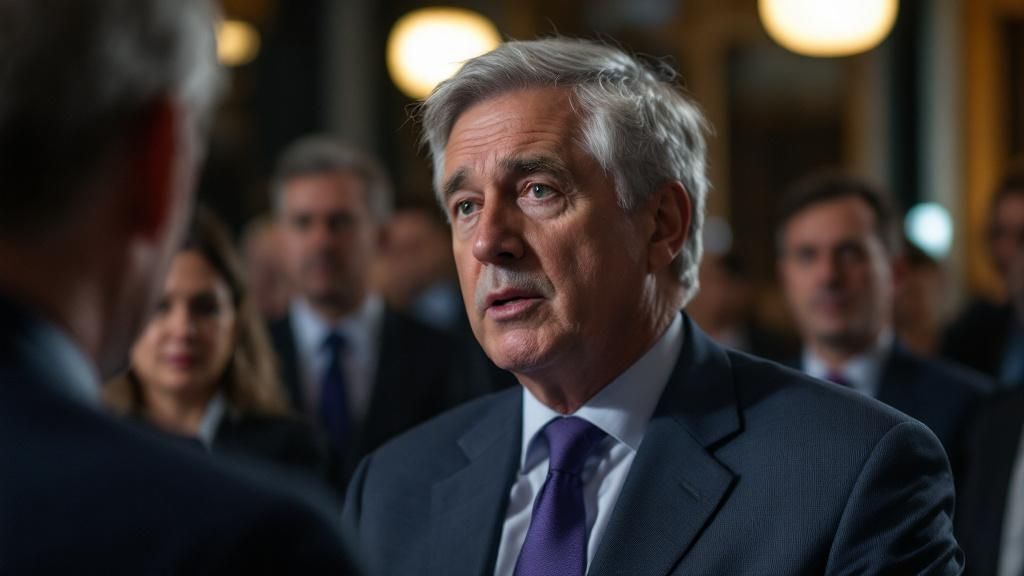
As households across the nation struggle with rising energy bills and inflation climbing to unprecedented levels, the opposition figurehead has mounted a biting attack on the Government’s handling to the cost-of-living emergency. In a heated parliamentary exchange, the Labour party has questioned the administration’s insufficient support measures, demanding more substantial intervention to help hard-pressed families. This article analyses the escalating tensions surrounding the crisis and explores the contrasting visions for economic relief.
The Opposition’s Criticism of State Policy
The opposition leader has intensified scrutiny of the government’s response to the worsening affordability crisis, contending that existing policies fall woefully short of addressing the level of hardship impacting British families. During parliamentary exchanges, the opposition has presented a detailed critique spanning insufficient financial assistance, insufficient intervention in energy markets, and a apparent absence of speed in addressing inflation. The opposition contends that whilst families contend with record-high bills, the government’s fragmented strategy simply treats symptoms rather than dealing with fundamental causes of economic distress.
Central to the opposition’s position is the contention that the government has badly miscalculated both the severity and duration of the crisis. Opposition representatives have underscored data suggesting that millions of people now experience real hardship, with many forced to choose between keeping warm and feeding themselves. The opposition argues that the government’s initial response failed to assess the crisis’s consequences, leading to assistance programmes that proved inadequate when the situation got worse further. This wrong assessment, they argue, reveals systemic weaknesses in economic forecasting and preparedness.
Inadequate Support Systems
The opposition has directly criticised state assistance programmes as inadequate and misdirected, contending that fuel cost controls fall short of protecting vulnerable populations effectively. Commentators highlight that whilst the government has introduced multiple support measures, encompassing grants and council tax rebates, these initiatives offer short-term assistance without tackling structural challenges. The opposition argues that eligibility-based assistance remain overly stringent, shutting out millions of working families who still face difficulties with escalating prices. Furthermore, they argue the government’s approach falls short of the ambition necessary to confront such an unprecedented economic challenge.
Opposition assessment indicates that present welfare systems disproportionately disadvantage those earning mid-range salaries who miss out on eligibility thresholds for focused aid. The party has outlined alternative frameworks involving unconditional income transfers, broadened support schemes, and public sector action in fuel sectors to control costs. They highlight that temporary measures, whilst welcome, do not address comprehensive structural reform. The opposition maintains that without substantial legislative change and greater state spending, working people will keep facing severe money pressures in the coming period.
Long-term Economic Strategy Concerns
Beyond urgent crisis response, the opposition has posed key questions regarding the government’s long-term economic approach and competitive standing. Opposition analysts argue that the existing strategy emphasises short-term political optics over durable economic planning, potentially compromising Britain’s future economic wellbeing. They contend that without targeted investment in renewable energy infrastructure, industrial capacity, and human capital development, the nation risks sustained economic decline. The opposition emphasises that addressing cost of living pressures requires wide-ranging reforms addressing productivity, technological innovation, and economic sector development alongside pressing relief measures.
The opposition has expressed concerns that government policy is fragmented across different sectors, with energy policy, industrial strategy, and fiscal measures operating in isolation rather than as coordinated elements. Critics argue this piecemeal framework impedes tackling of core inflationary challenges and deep-rooted economic issues. The opposition advocates for a unified national approach covering energy transition, manufacturing revival, and skills development. They maintain that true economic recovery demands transformative policy reform rather than modest changes to existing frameworks.
Government’s Defence and Counterarguments
The government has robustly defended its economic strategy, arguing that the cost of living pressures are chiefly driven by global factors beyond Westminster’s immediate reach. Ministers have underscored the exceptional character of the energy crisis, resulting from geopolitical tensions and international supply chain disruptions. They maintain that their focused assistance measures, covering the price cap on energy and living cost payments, constitute a prudent and financially sound approach. The Government Treasury maintains that profligate expenditure could exacerbate inflation even more, damaging long-term economic stability and ultimately prejudicing the very households the opposition claims to champion.
Government representatives have highlighted the substantial financial assistance previously allocated, totalling billions of pounds in direct support to those in need. They argue that their approaches reconcile short-term assistance with responsible financial stewardship, avoiding the cycle of indebtedness that uncontrolled expenditure could cause. Ministers also draw attention to their efforts in boosting energy security through sustainable energy projects and market diversification. The government contends that whilst the opposition delivers sympathetic language, their suggested policies lack financial viability and would create unsustainable outcomes without increasing taxation or greater public borrowing.
Furthermore, state representatives highlight their commitment to addressing underlying economic challenges through efficiency enhancements and corporate investment encouragement. They argue that enduring recuperation demands systemic economic transformation rather than immediate financial relief. The government considers this strategy in the end produces increased wealth and protection for every citizen.
